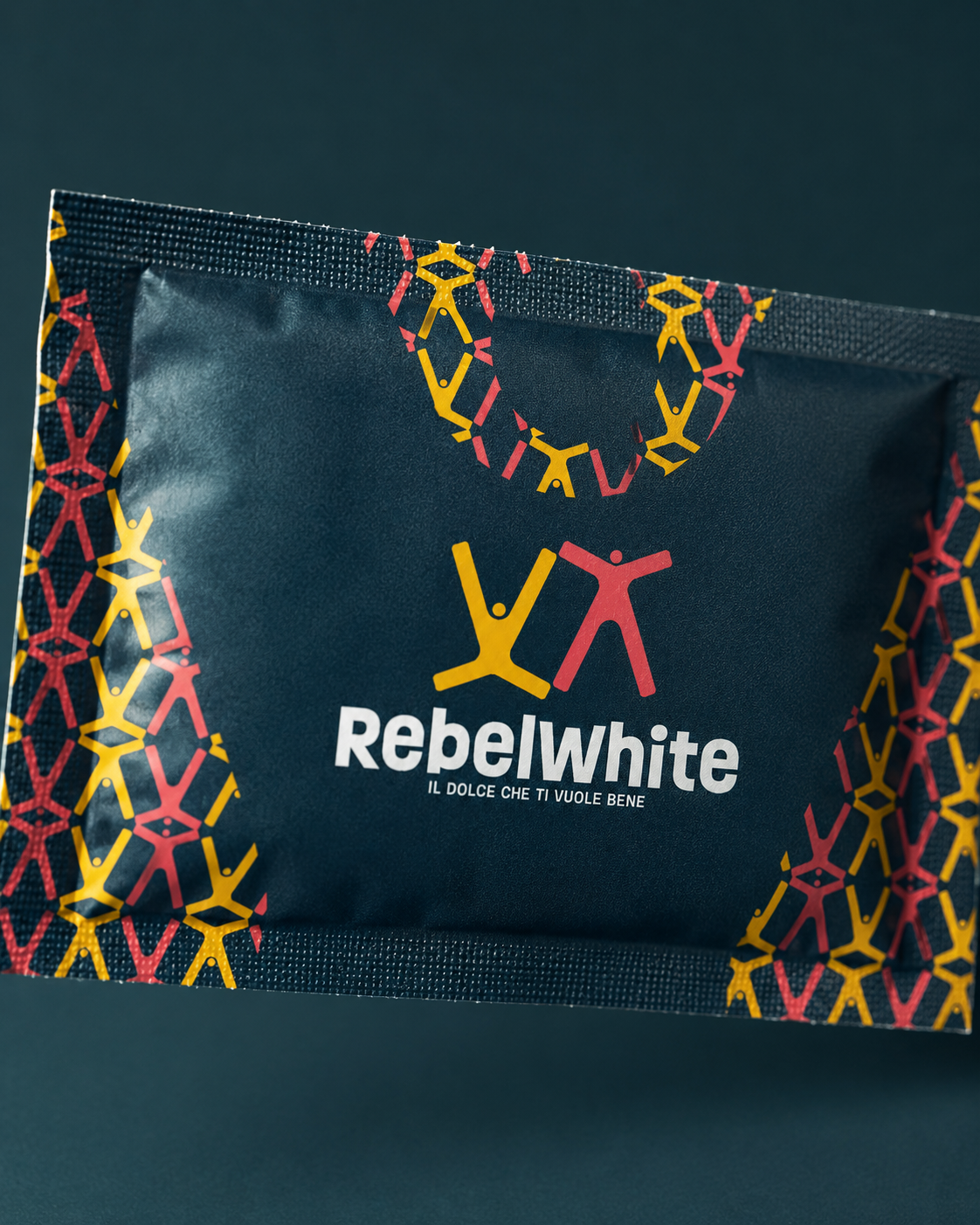
The first sugar
designed
for people who've already
given up too much.
Wholesome, delicious, gentle on blood sugar.
And finally without aftertaste.
What Rebel White is not
Let's clear it up right away.
Not a sweetener
Not a sugar-free product
Not a compromise


It doesn't imitate. It doesn't replace.
It's sugar.
But engineered to behave in a different way.
What's inside, and what isn't.
A formula built
on precise criteria.
Inside
you'll find
- ✓
Natural sugars
The foundation. Same taste, same behavior when baking, same familiarity.
- ✓
Functional fibers
They slow the absorption of sugars, support metabolic balance and are good for your gut. Sugar and fiber together: it sounds like an oxymoron — it's actually good news.
- ✓
Botanical extracts
Natural elements that round out the formula without altering its flavor profile.
Left
at the door
- ✗
Artificial sweeteners
No aspartame, sucralose or other hard-to-pronounce names. Substances that mimic sweetness while leaving a metallic taste and long-term tolerance questions behind.
- ✗
Polyols
Maltitol, sorbitol, xylitol: carbohydrates derived from the chemical reduction of sugars. Often used in sugar-free products; often the cause of bloating, cramps, unwanted effects.
- ✗
Aftertaste
The one that reminds you it isn't the same. Not here. Seriously.
I numeri che contano
The context
Rebel White
was born into.
— Italy
Italians with type 2 diabetes
Around 5 million people, plus another million undiagnosed. It doesn't happen overnight. It's often the result of everyday habits adding up over time.
— Industry
Hidden sugar in products
Only 25% of the sugar we consume is added by us. The remaining 75% is already in the products we buy: sauces, bread, light yogurts, snack bars. The WHO recommends staying under 12 teaspoons a day. We consume nearly double that.
The body doesn't react
to what is "sweet"
in any generic way.
It reacts to how that sugar arrives, what signals it sends, what rhythm it imposes.
Some sugars enter the bloodstream too fast: they raise blood sugar, then crash it, leaving fatigue and hunger behind. Rebel White releases energy gradually, doesn't cause glycemic spikes, and respects the body's rhythm.
It isn't magic.
It's the difference functional fibers make when they work alongside natural sugars.
Il confronto
Not all
sugars
play
the same game.
Traditional sweeteners
They make big promises.
Sweet like sugar, but with no calories. Except then come the aftertastes, the unpronounceable ingredients, and a body that doesn't quite know how to react. Acesulfame, saccharin, aspartame, sucralose: not sugars, but substances that mimic sweetness. Often leaving more problems than they solve.
Sugar-free products
They remove the sugar. And often the taste too.
Polyols like maltitol and sorbitol are the industry's most common substitutes. They look like a solution: lower glycemic impact than sugar, same appearance. But the body recognizes them as foreign substances. Bloating, cramps, gastrointestinal effects. Labels don't always say it as clearly as they should.
Rebel White
It's real sugar. Just rethought.
Same taste as the sugar you know. Same behavior when baking. Functional fibers that slow absorption. No polyols, no sweeteners, no aftertaste. Controlled glycemic impact. With 20% fewer calories. It doesn't pretend to be something it isn't.
Il perché
Rebel White was born
from an uncomfortable question:
"How can it be
that no sugar exists
that's actually
good for you?"
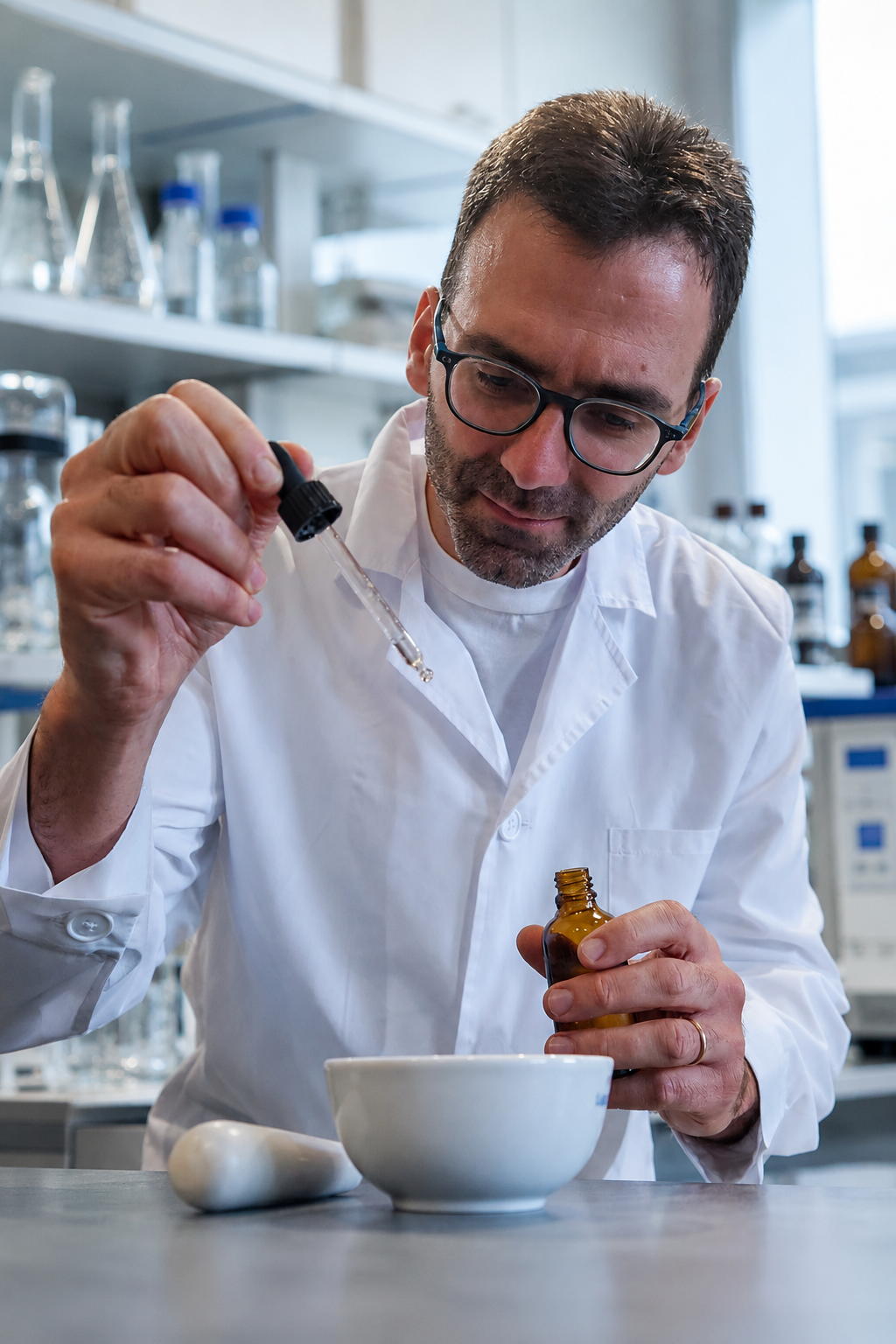
Silvio Panettieri — Chemist, founder
After years in the confectionery industry — between labs and formulas — Silvio Panettieri decided the answer couldn't be another alternative. It had to be a break.
Not with a trend. With a new formula: designed for anyone who wants to enjoy sweetness without side effects, without aftertastes, without guilt.
For those who have already given up enough.
Wellness shouldn't require sacrifice.
If you've made it this far, there's a question on your mind.
When can I try it?
Rebel White
isn't everywhere yet.
But it's coming.
If you want to be among the first to try it, this is the moment to say so.